Choosing just one favourite place in the National Park is difficult, and there are many places that we love and have special meaning. Our trustees have reflected on some of their favourite spots, from Hampshire to East Sussex.
The Hampshire Hangers
Martin Small, Planning Committee Chair explains he is particularly fond of the Hampshire end of the Park, for the variety and more intimate nature of its landscapes. For his favourite spot, he has chosen the Hampshire Hangers. These remnants of ancient beech, lime, yew and ash woodland, known as hanger woods from the Old English hangra meaning a wooded slope, can be found clinging to the steepest slopes of a terrace of greensand running approximately north-south from near Bentley to East Meon.
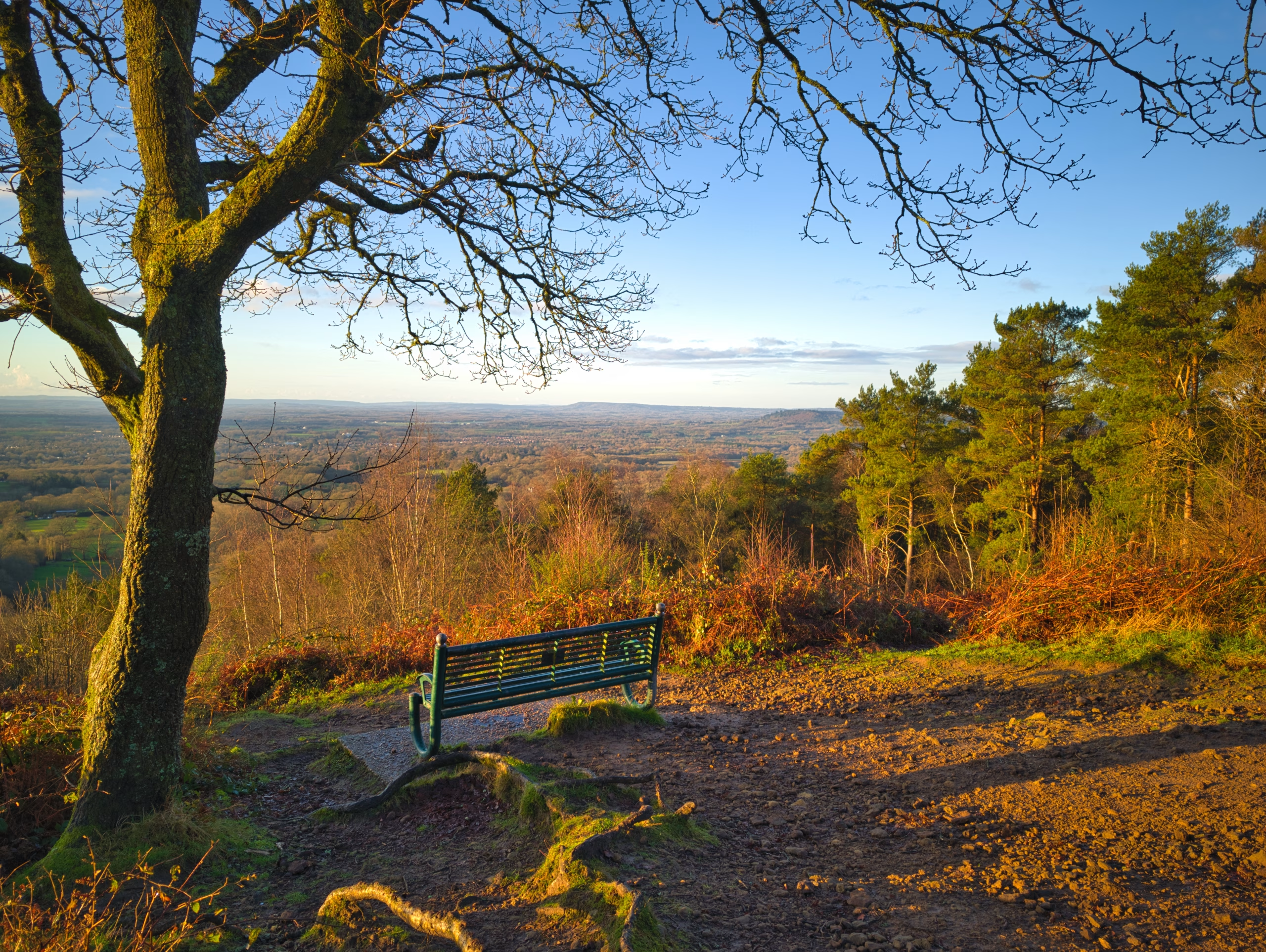
“I first experienced this wonderful area walking part of the Hangers Way from Petersfield to Alton via Selborne one October weekend many years ago. I was struck not only by the beauty of the woodlands in their autumn colours and the fantastic views, but also by the seclusion and tranquillity of the area. Narrow sunken lanes make access to the Hangers by road difficult, so there is thankfully little intrusion by traffic. Built development is also limited, but where there are historic cottages, they are often of the local creamy-coloured Malmstone.
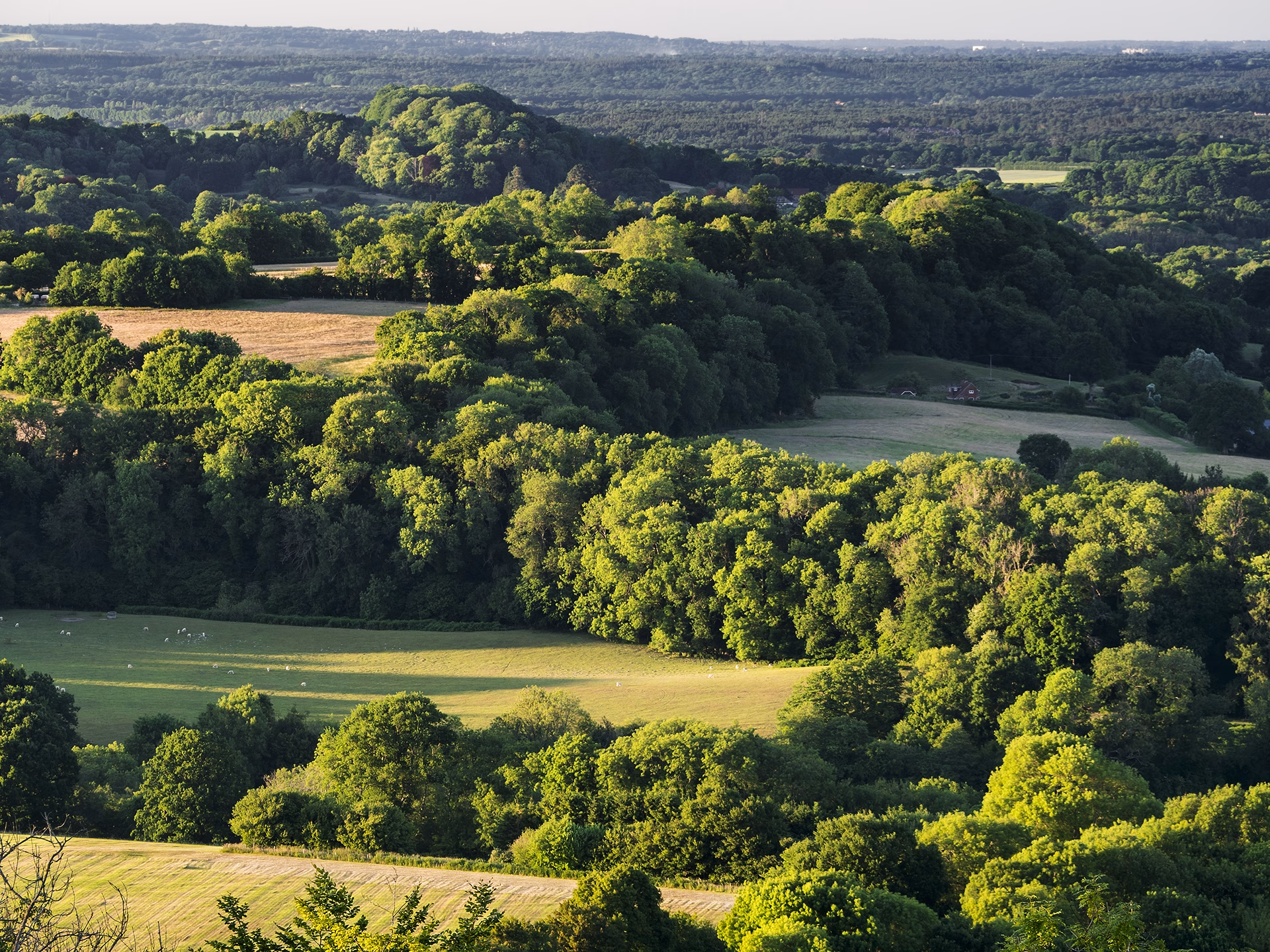
The hanger woodlands support rare flora such as wild garlic, bluebells and helleborines and a rich variety of wildlife, including the purple emperor butterfly. They are designated as Special Area of Conservation in recognition of their rare habitats and species. Foremost among the Hangers is Ashford Hanger, known as “Little Switzerland” because of its beauty and sharp, dramatic relief, and designated as a National Nature Reserve.
The Hangers also have important historical links with the 18th century naturalist Gilbert White and the poet Edward Thomas, who drew inspiration for his writing from the natural beauty of the area. If you come to walk amongst these magical woodlands, it is not hard to see why!
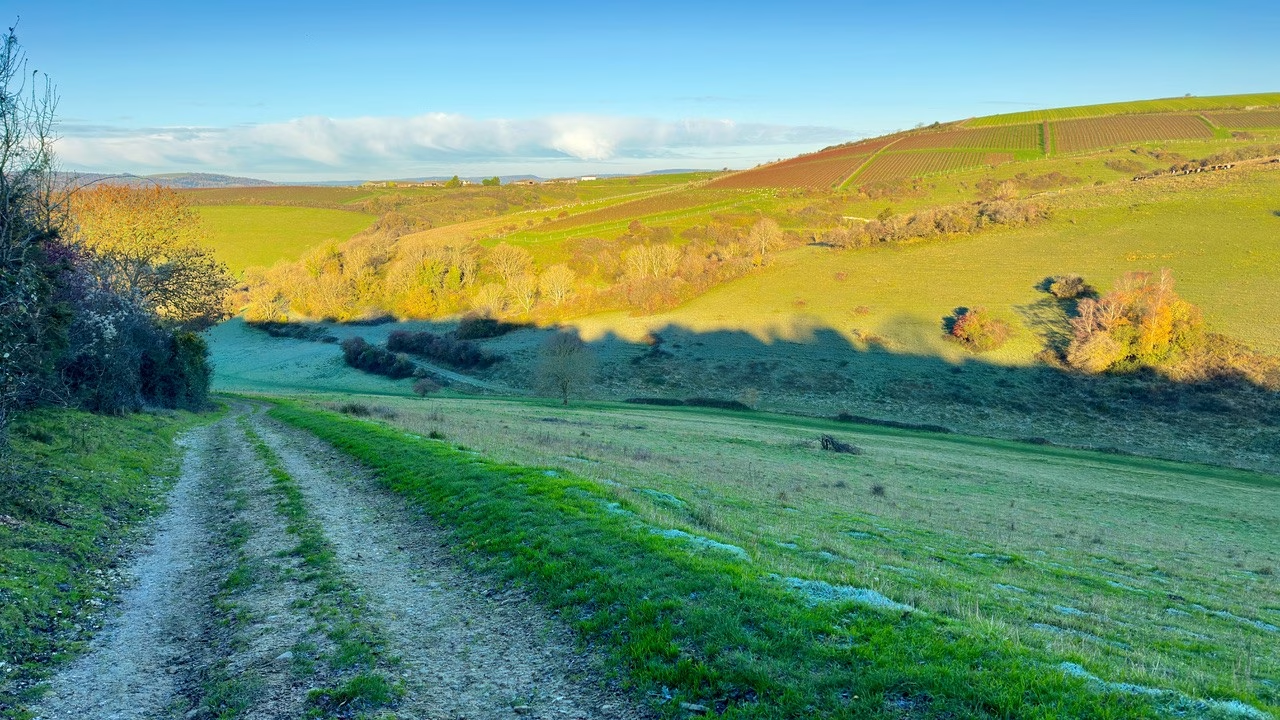
Firle Beacon, East Sussex
Few of the hills of the South Downs stand out as individual summits, but a notable exception is Firle Beacon. Travelling east from Lewes you cannot fail to be struck by the sublime symmetry of its slopes. On a summer’s evening the soft light on its western face is a picture. The Beacon holds archaeological secrets, notably neolithic and bronze age barrows. Its name must derive from use as a location for signalling. But it is its shape, seen from the west, which inspires us today, as it must have inspired and attracted Stone Age people five millennia ago.
Andrew Lovett, Treasurer.
Rackham Banks, West Sussex
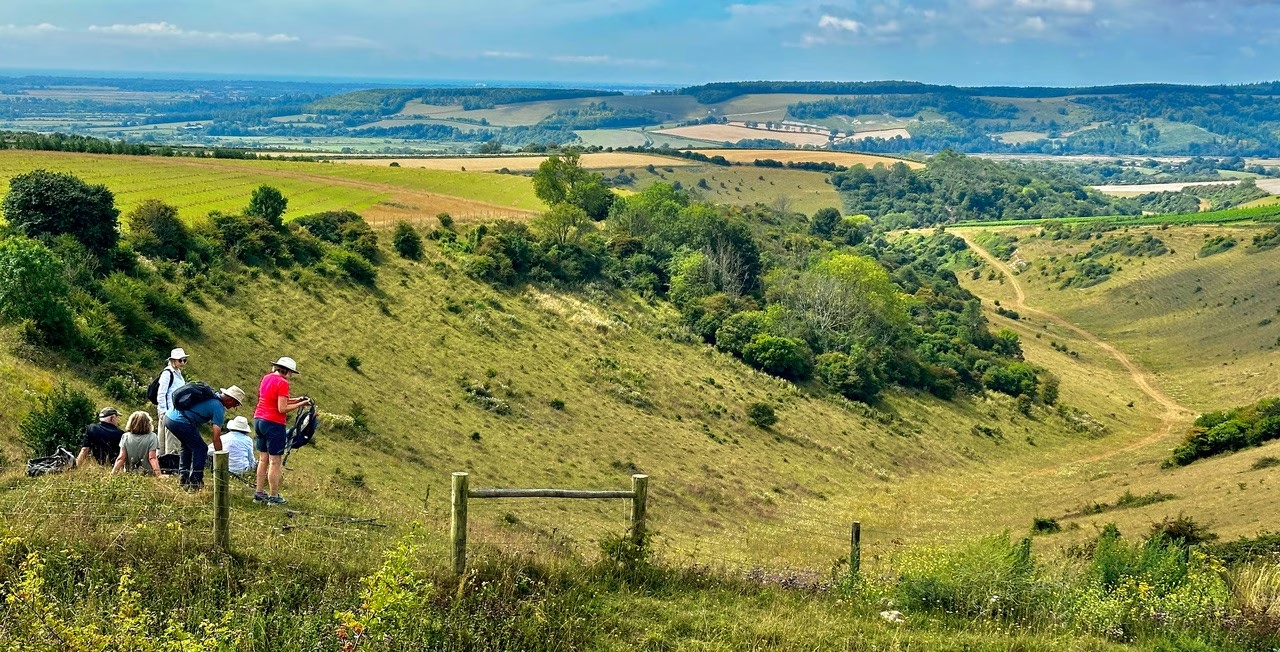
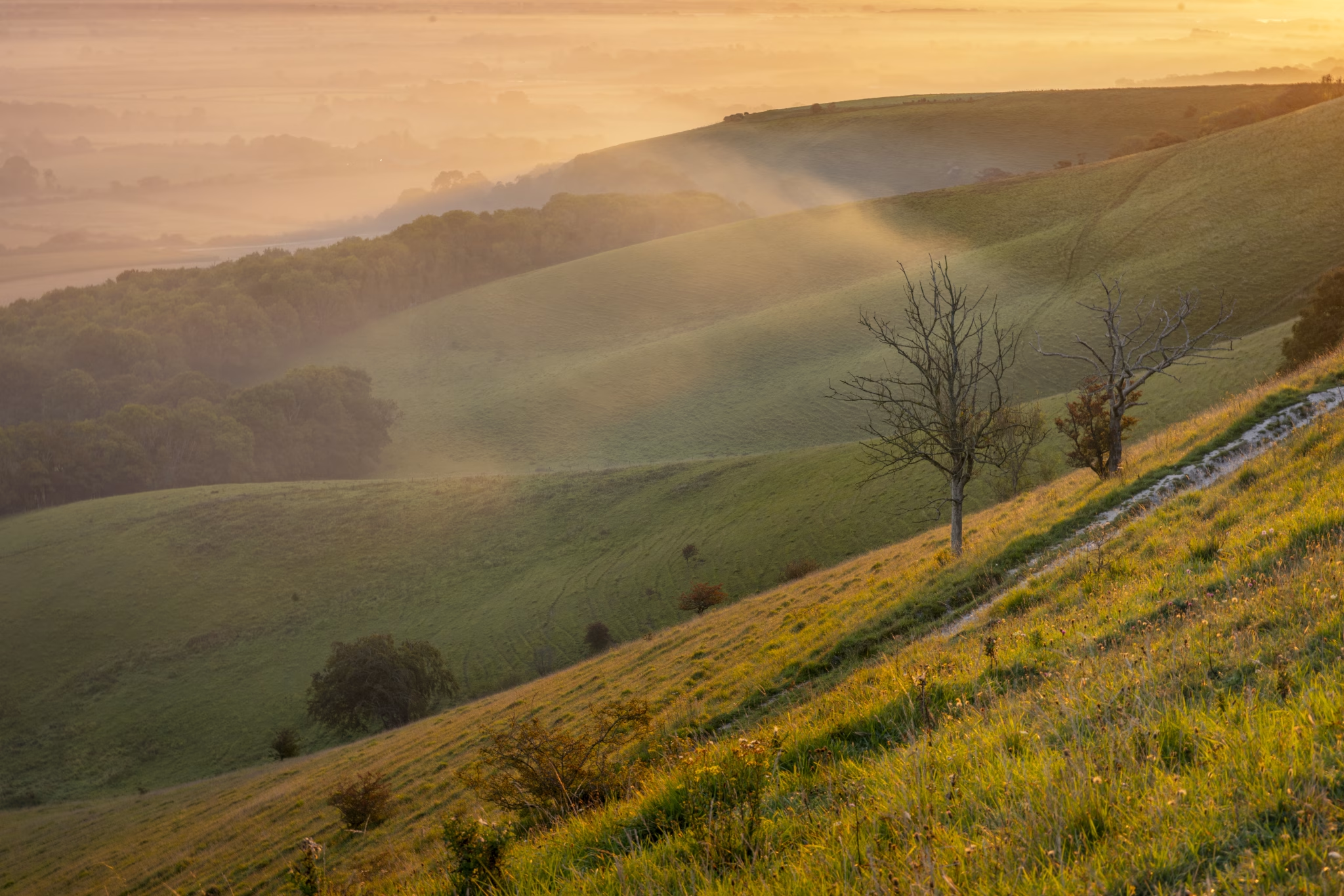
Trustee David remarks that the winding, deep, u-shaped valley which runs south-west from Rackham Banks is his happy place. “Looking down into the valley is reward itself, but once you descend, with the steeply wooded slopes on either side, it feels even more special.
You never forget where you saw your first Adonis Blue butterfly. Medley Bottom at the southern end of the valley is a National Park hotspot for all the chalk downland butterflies. More than that though, the sense of tranquillity is off the scale. At the right time of year, wildflowers adorn the slopes, and for a few months, the Garden of Eden exists here.
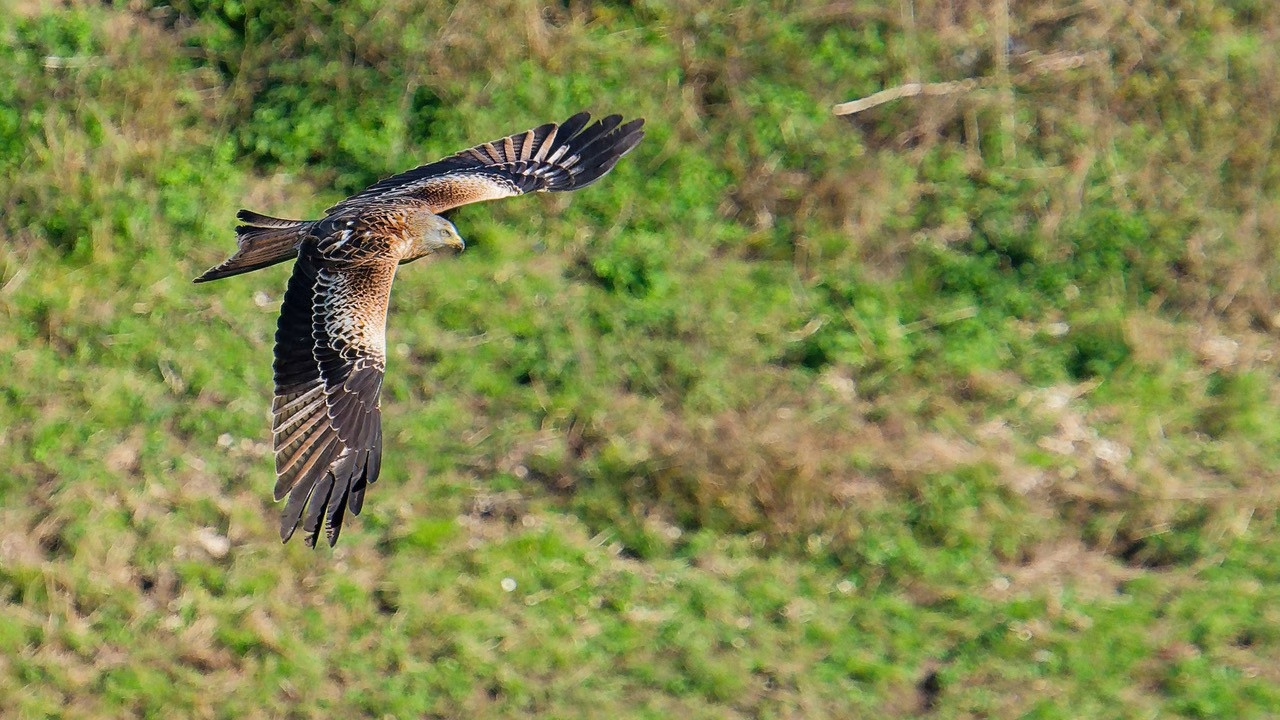
One of my happiest memories is the day I climbed up the steep hill out of the valley. Upon reaching halfway, stopping to catch my breath, I spotted a lone Red Kite soaring across the valley. Clearly just enjoying the moment as it soared above the earth below, I captured the scene with my camera, a moment I will never forget.
David Taylor, Trustee.