New report urges Government to stop pollution at source, fix the broken water system, and restore nature to England’s rivers, lakes and seas in next generation water reforms
A major coalition of environmental organisations have launched Clean Water Now, a new report setting out the urgent reforms needed in the upcoming Water Reform Bill.
Currently, sewage, farming pollution, and chemicals pollute rivers, lakes, and seas, with just 14% of English rivers in good ecological condition. Habitats are shrinking, wildlife is suffering, and people are getting sick. If Government doesn’t act now, this once-in-a-generation opportunity to change the rules could slip away, leaving England’s waters in decline for years.
The launch of the report marks the start of a new public campaign demanding ambitious action from Government, regulators, and industry. As a first step, campaigners are urging the public to email their MPs, calling them to back strong, enforceable measures to deliver clean water.
The report sets out three core demands for the Water Reform Bill:
Stop the polluters − clamp down on sewage, restrict intensive agriculture and ban toxic chemical pollution.
Fix the broken system − stop water companies putting profit before people and nature, with a tough new regulator focused on nature and local communities involved.
Restore nature − creating new natural habitats along rivers and coastlines, building natural resilience to climate change and bringing wildlife to communities around the country.
Mark Robinson, Senior Campaigns Manager at WWT, the wetland charity, said: “We are a nation of water-lovers with one, simple message – enough is enough. Now is the time for a plan that matches the reality of the crises facing our waterways, and recognises the essential role of nature in bringing them back to health. If we’re truly to turn the tide on pollution, the government must ensure this unique opportunity to reform the system brings us more water, more wetlands and more wildlife.”
The report argues that years of weak enforcement, regulatory failure, and political delay have allowed pollution from sewage, agriculture, and toxic chemicals to continue while wildlife has declined, and public trust has eroded. It calls for binding national targets, stronger regulators, and regional water authorities with real powers to plan and enforce action at catchment level.
As Parliament prepares to debate the Water Reform Bill, campaigners say half-measures will no longer be tolerated. Public support for clean rivers and beaches is overwhelming, and communities across the country are demanding change. British waters cannot wait. Read the full Clean Water Now report here and take action by telling your MP that you expect laws for water that stop polluters, fix what’s broken, and deliver clean water − now.
Campaign for National Parks has joined forces with protected landscapes bodies, leading environmental charities and conservation societies to call on Government to ensure any visitor levy properly supports National Parks and National Landscapes.
The Government announced plans in November 2025 to bring forward an overnight accommodation levy for Mayoral Authorities, and a consultation on the proposals has just closed. Campaign For National Parks (CNP) are very concerned that Protected Landscapes could lose out under the existing plans and that more emphasis needs to be given to these vitally important places. National Parks and National Landscapes are major drivers of regional tourism and rural economies, attracting millions of visitors each year. At the same time, high visitor numbers can place pressure on these fragile environments and small communities.
That’s why they’ve written to Steve Reed, Secretary of State for Housing, Communities and Local Government, insisting that any visitor levy introduced must ensure that revenues raised in and around Protected Landscapes are reinvested locally, with a clear focus on nature recovery and environmental protection.
We have added our name to the letter in support. The letter also calls for National Park Authorities and National Landscapes Partnerships to have a significant role in allocating funds, warning that without proper ring-fencing, money raised from visitors could be diverted elsewhere rather than supporting the landscapes that attract them in the first place.
How we are supporting Sussex Wildlife Trust with essential conservation at Ebernoe Wildlands Nature Reserve.
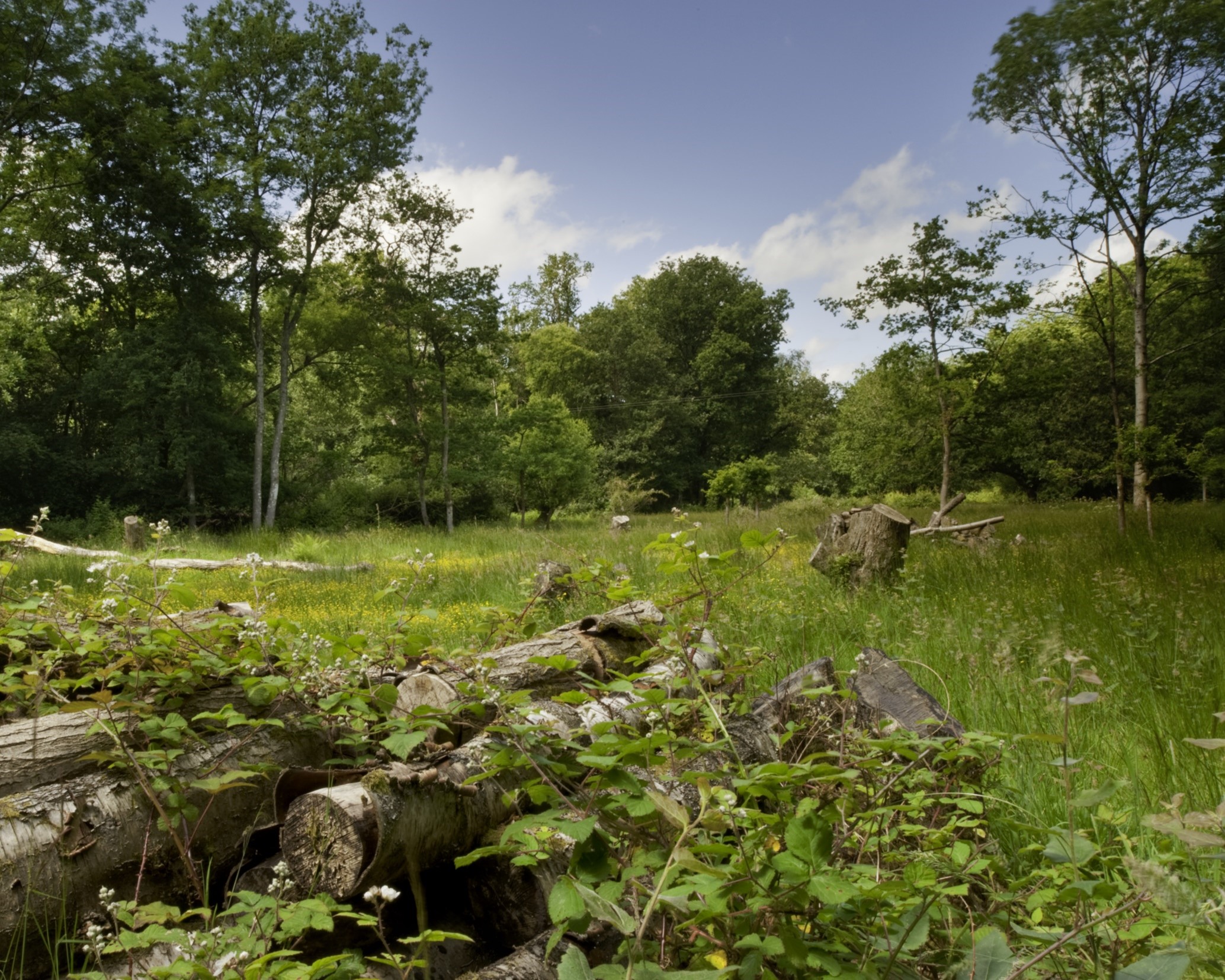
Ebernoe Wildlands Nature Reserve features one of the richest woodlands for wildlife in the South East. It is a matrix of dense woodland, sunny rides, open glades, and scrubby edges. Barbastelle and Bechstein’s bats, the rarest bats in Europe, make their homes in the dense woodland whilst amongst woodland glades you may spot Purple Emperor, White Admiral and Silver-washed Fritillary butterflies. If lucky, you may see, or hear, birds like Firecrest and Marsh Tit enjoying the kaleidoscope of scrubby habitats.
Ebernoe Common copyright Sussex WT Nigel Symington
This is one of Sussex Wildlife Trust’s (SWT) most important nature reserves. As such, it is often the subject of targeted nature reserve expansion as they seek to regenerate nature on a larger scale. Alongside Ebernoe Common lies Butcherlands, a rewilding area with management integrated with that of Ebernoe.
Key to the management of these reserves is grazing. Ebernoe Common is an ancient wood-pasture, managed for centuries through a combination of traditional woodland management and grazing. What we may call rewilding at Butcherlands is really just a modern take on wood-pasture, so also driven by grazing. Grazing is thus the main factor to create a habitat mixture of incredible diversity, and thus more living space for a greater variety of species.
Getting the grazing right is vital to maintain this matrix. Too much and the dense woodland reduces, and the bats suffer. Too little and the open glades and rides will disappear as trees shade out the species that thrive in sunlight. So SWT put their cows (“Sussex Reds”) onto the site for carefully planned periods. Just enough to get the balance right!
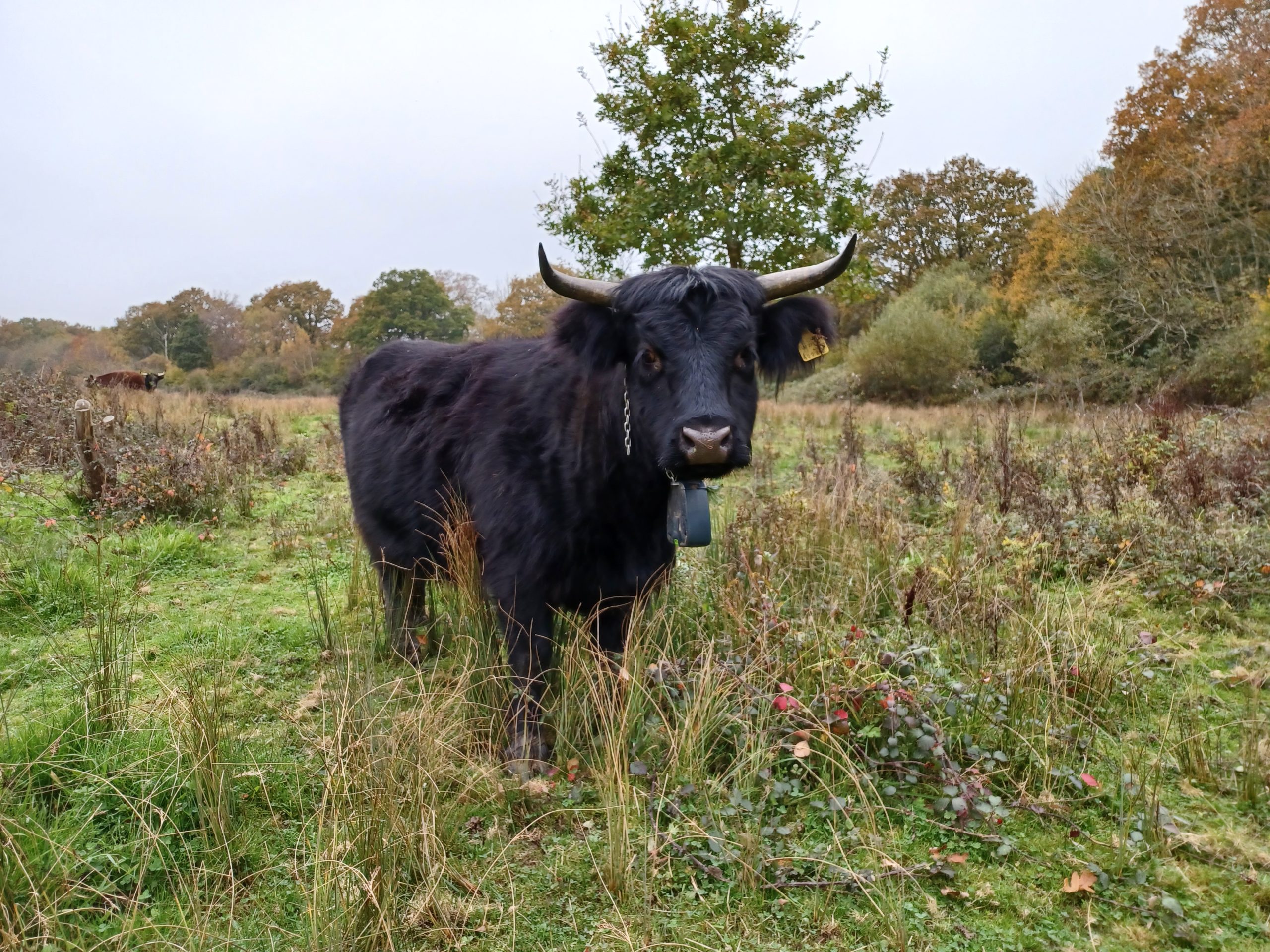
This works well, and SWT have amassed considerable experience in managing their cattle. One essential activity, however, is “lookering” – the checking of cattle every day. In an open field this is easy, but in this patchy woodland it can take hours. This can compromise SWT’s resources to deliver the necessary grazing regime. SWT endeavour to attach GPS collars to the cattle, emitting signals that can be picked up by a smartphone, allowing their position to be identified, and the wellbeing of all the cattle can be checked easily.
It may seem odd that the viability of a grazing project (and so the richness of wildlife on a nature reserve) comes down to a piece of electronic kit hanging round a cow’s neck. Yet this is the case. Friends of the South Downs have seen this as a key point at which our financial support can help. Funding for GPS collars enables SWT to manage their cattle more efficiently (and effectively) and so deliver a great diversity of wildlife at one of the most important nature sites in the South Downs.
And there is something romantic about seeing native Sussex Reds calmly grazing in the dappled shade of an open sunny woodland. It’s good for Friends to be a part of this project.
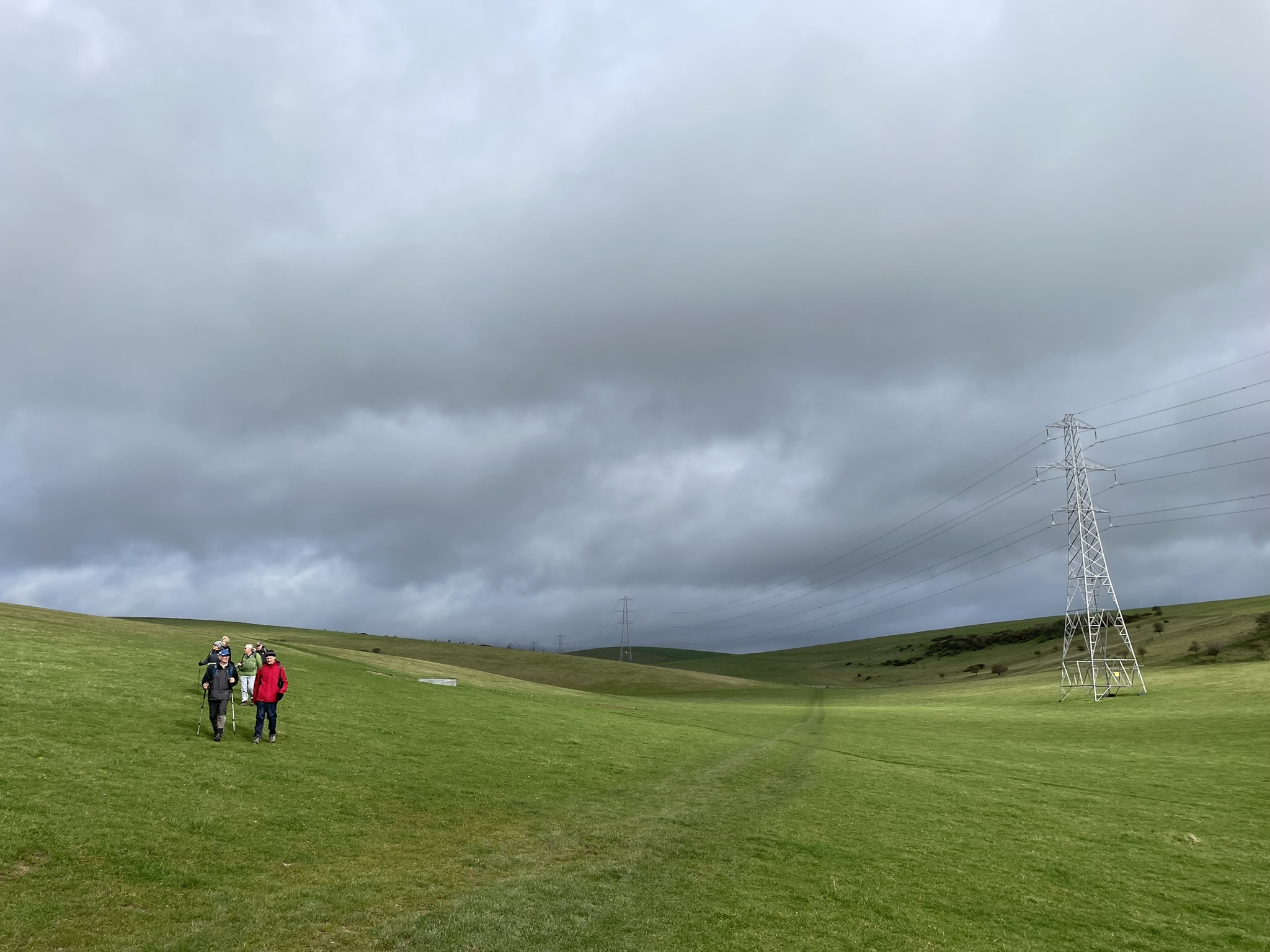
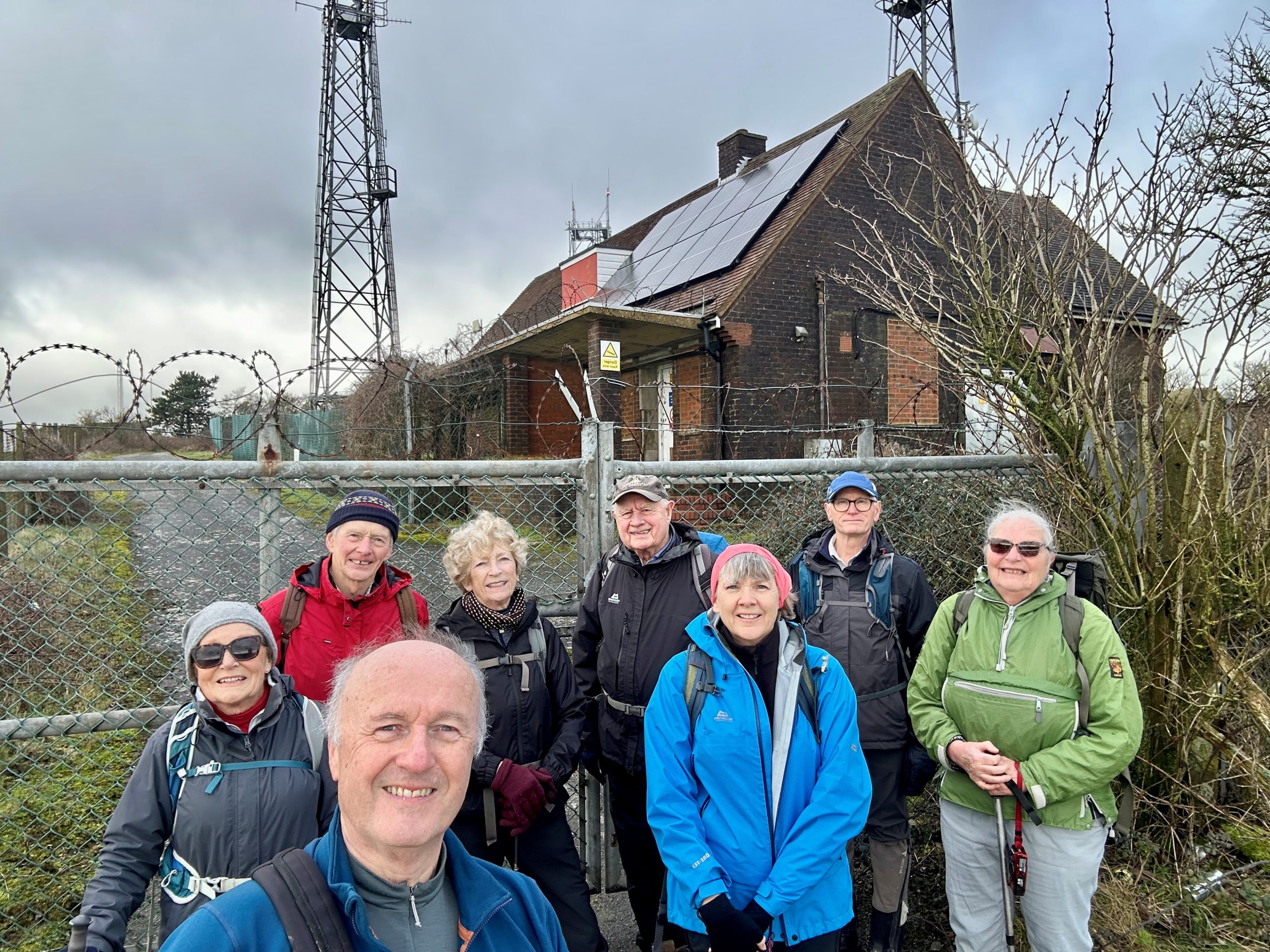
Trustee David Taylor recently led a guided walk around Truleigh Hill near Shoreham. During a coffee break, David spoke about RAF Truleigh Hill’s role as a radar site during WW2 and the early years of the Cold War.
Sitting at over 700 feet above sea level, Truleigh Hill became operational in July 1940, right at the height of the Battle of Britain. One of six Sussex radar sites at the time, Truleigh Hill’s contribution to victory in the battle cannot be overstated. The Germans poised just across the Channel were ready to invade, all they needed to succeed was control of the skies. Britain had introduced the world’s first integrated air defence system, just in time to give the RAF the advantage they needed. With early warning of an approaching air raid, RAF fighters could gain much needed altitude before entering any fight; the rest is history.
Later in the war, Truleigh Hill was selected as a location for ‘Gee’, a navigation system which gave allied bombers a much more accurate position, vital for effective targeting. This navigational aid role continued after the war and into the early 1950’s.
In 1949, the Russians detonated their first atomic bomb, and the threat of war returned. Truleigh Hill was upgraded to become part of the ROTOR network, an advanced radar system designed to detect incoming, high altitude bombers. The ‘bungalow’ in the image is actually the heavily fortified guardroom, built post-war and giving access to a tunnel. The tunnel led to an operations bunker, located 50ft underground and able to withstand a near-miss from a 20 kiloton atomic weapon.
By 1957 with the advent of the hydrogen bomb, and advances in radar technology, fewer and better protected sites were required and Truleigh Hill ceased operations. The site was sold into private ownership in 1965 and now serves the emergency services and private telecommunications.
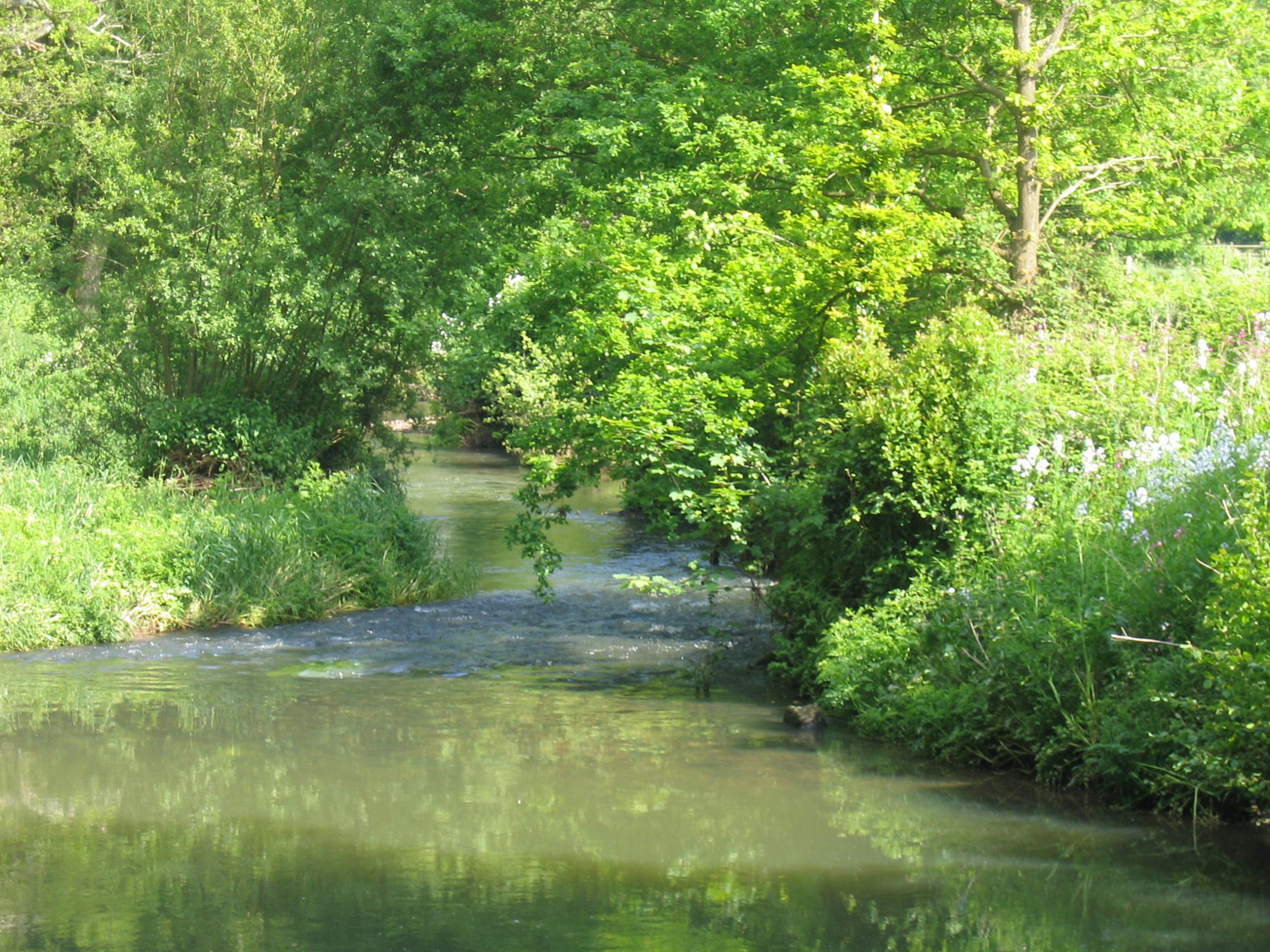
I hope you will have seen that the Campaign for National Parks (CNP) of which the Friends is, of course, a member has just published a Report, ‘Rivers at Risk’, on the state of rivers in the National Parks. Its findings make sobering reading, but sadly will not come as a surprise to anyone. You can read the report here.
The various river trusts operating within the Park are doing great work.
The CNP report under the heading ‘Citizen Science at the Forefront of River Health’ highlighted the contribution being made by ‘local communities and passionate campaigners in filling the gap left by environmental regulators in England and Wales’. This is where the Friends and you can make a valuable contribution; we by helping to fund the citizen science project being run by the Western Sussex River Trust and you by volunteering some of your time as citizen scientists.
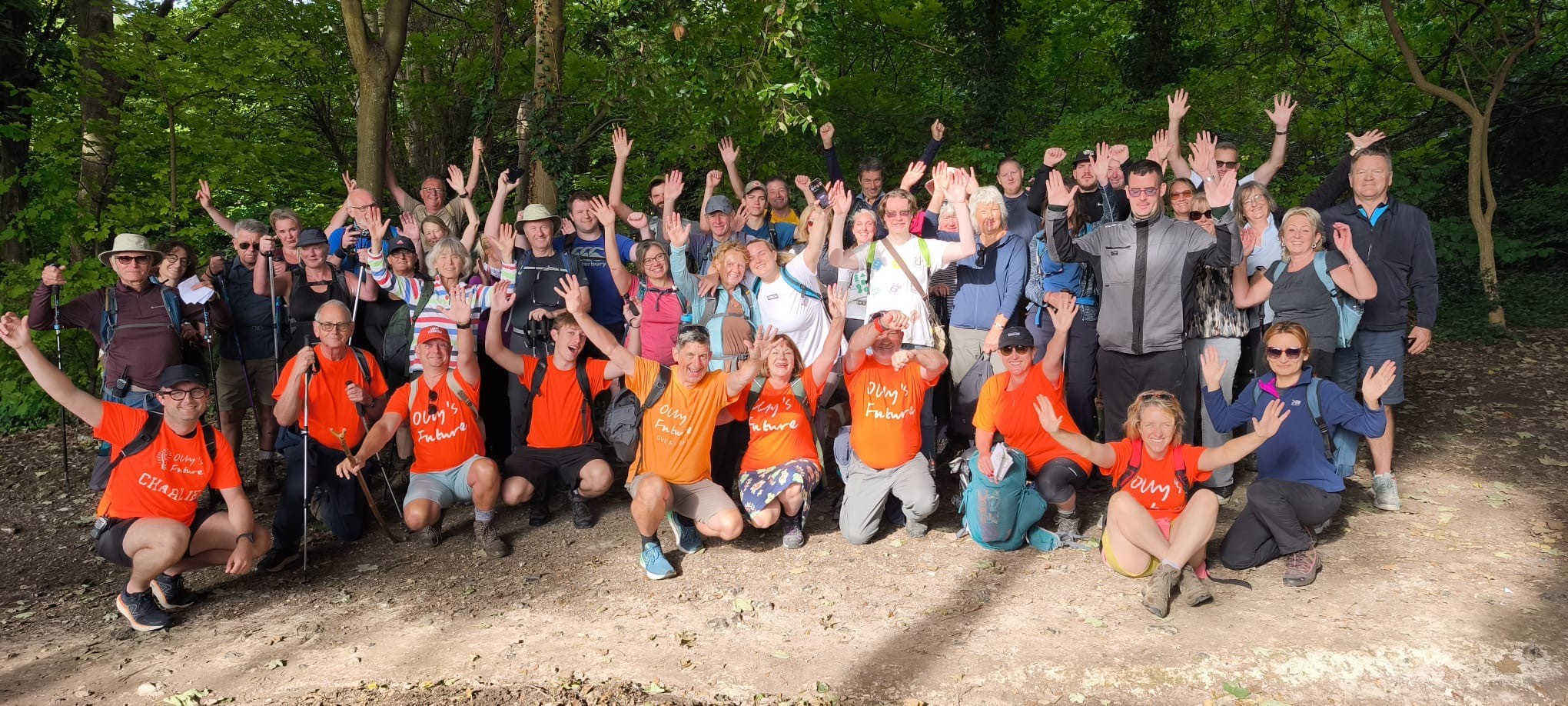
On Saturday 6th September, David Green, Chair, and David Taylor, FSD Volunteer and Walks Leader, took part in the Worthing Five Peaks Challenge 2025, along with Walks Leader and volunteer Tony Linturn.
Walking group with FSD Walks Leader and Volunteer David Taylor. Credit: David Taylor
The 17-mile walking challenge was completed by three groups. The group led by FSD Chair David Green finished 1 hour and 15 minutes before the other two groups.
The challenge was organised by Olly’s Future suicide prevention charity to coincide with World Suicide Prevention Day, September 10th, and to mark five years of the charity, which was set up by parents Chris Hare and Ann Feloy in memory of their 22-year-old son Oliver Hare. The charity provides vital suicide prevention work, including training to help spot signs in someone who may be thinking of suicide, and how to have conversations that could help save their life. To date, more than 7,000 people worldwide have had this training thanks to the team at Olly’s Future.
Ann, CEO, from Worthing, said, “I wanted to give people a chance to honour anyone they may love and miss, by connecting them with the beauty of nature on their doorstep and celebrating life. I was surprised to find people had come from a long way in some cases, to walk with us on the day. We will certainly be doing this again next year. It meant a great deal to have the support of members and Trustees of the Friends of the South Downs”
Chris Hare has supported various projects and events for Friends of the South Downs for many years, leading as a Project Manager most recently on the South Downs for All education and engagement project across Hampshire schools.
The five peaks of the challenge, each reflecting the five years that the charity has been active for, included Cissbury Ring, Chanctonbury Ring, Chantry Hill, Black Patch, and Highdown Hill. Every single penny raised will be used for the suicide prevention work delivered by Olly’s Future.
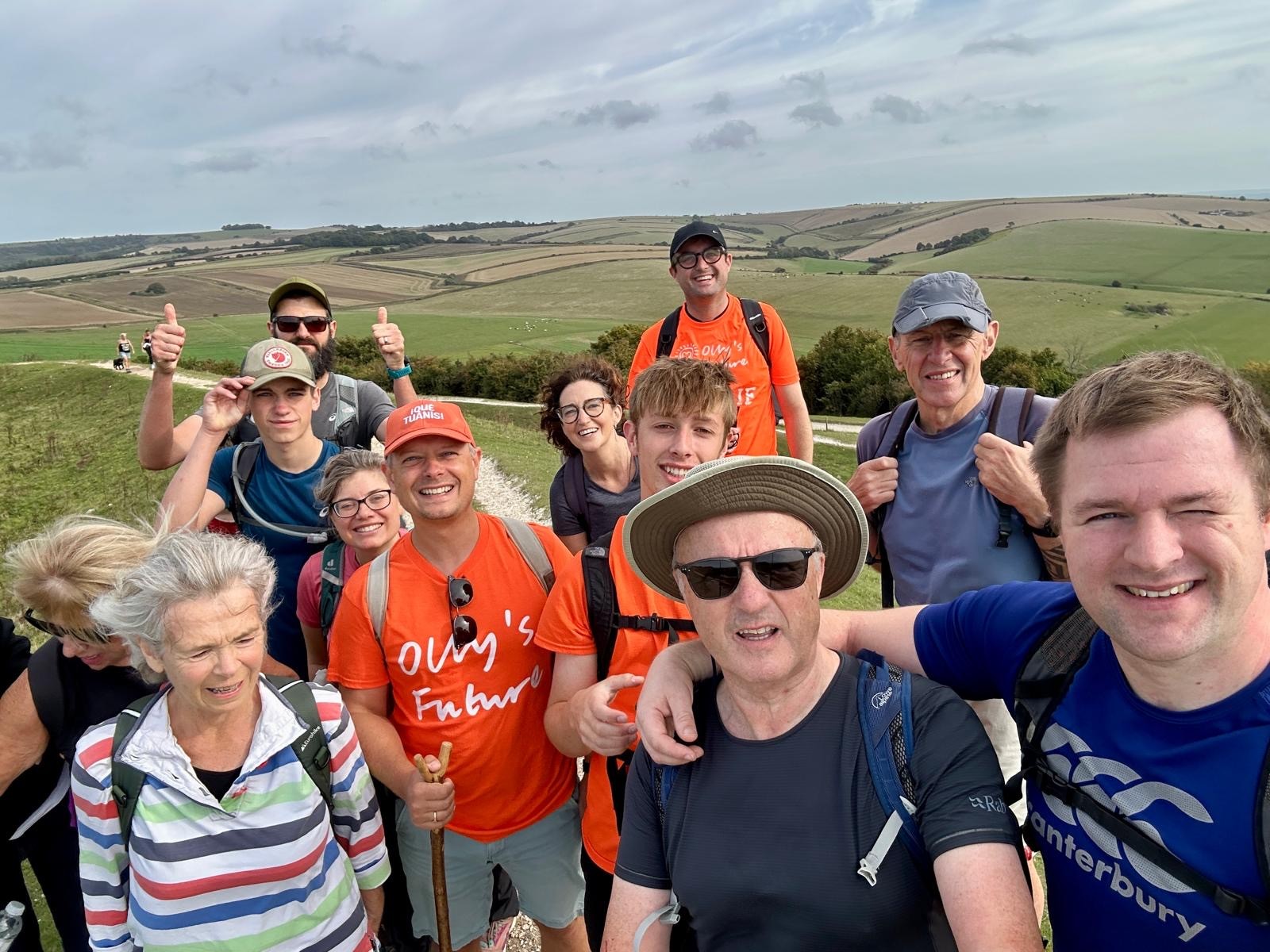
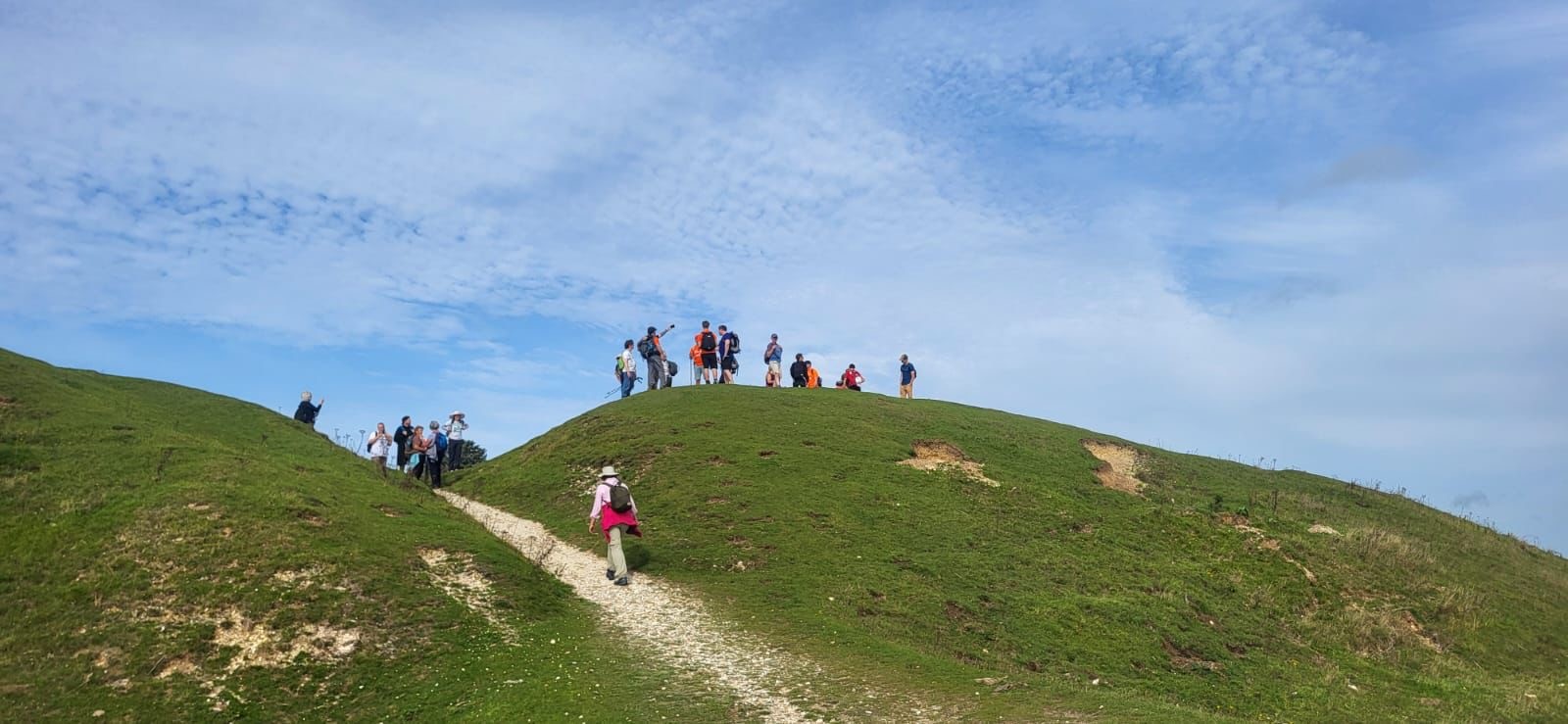
Walkers taking part on the challenge. Credit: Ann Feloy
David Taylor, retired airline pilot, Walks Leader and FSD Volunteer, completed the challenge with his son Matthew, having been made aware of the challenge by Tony Linturn, part of the leadership for Group One. Thanks to their fundraising efforts, they had raised over £1,200 by the day of the challenge, with Tony raising £750. Speaking to David about his experience completing the challenge, he said, “suicide amongst young people is a well-known issue, so Matthew and I were more than happy to do our bit to save lives.”
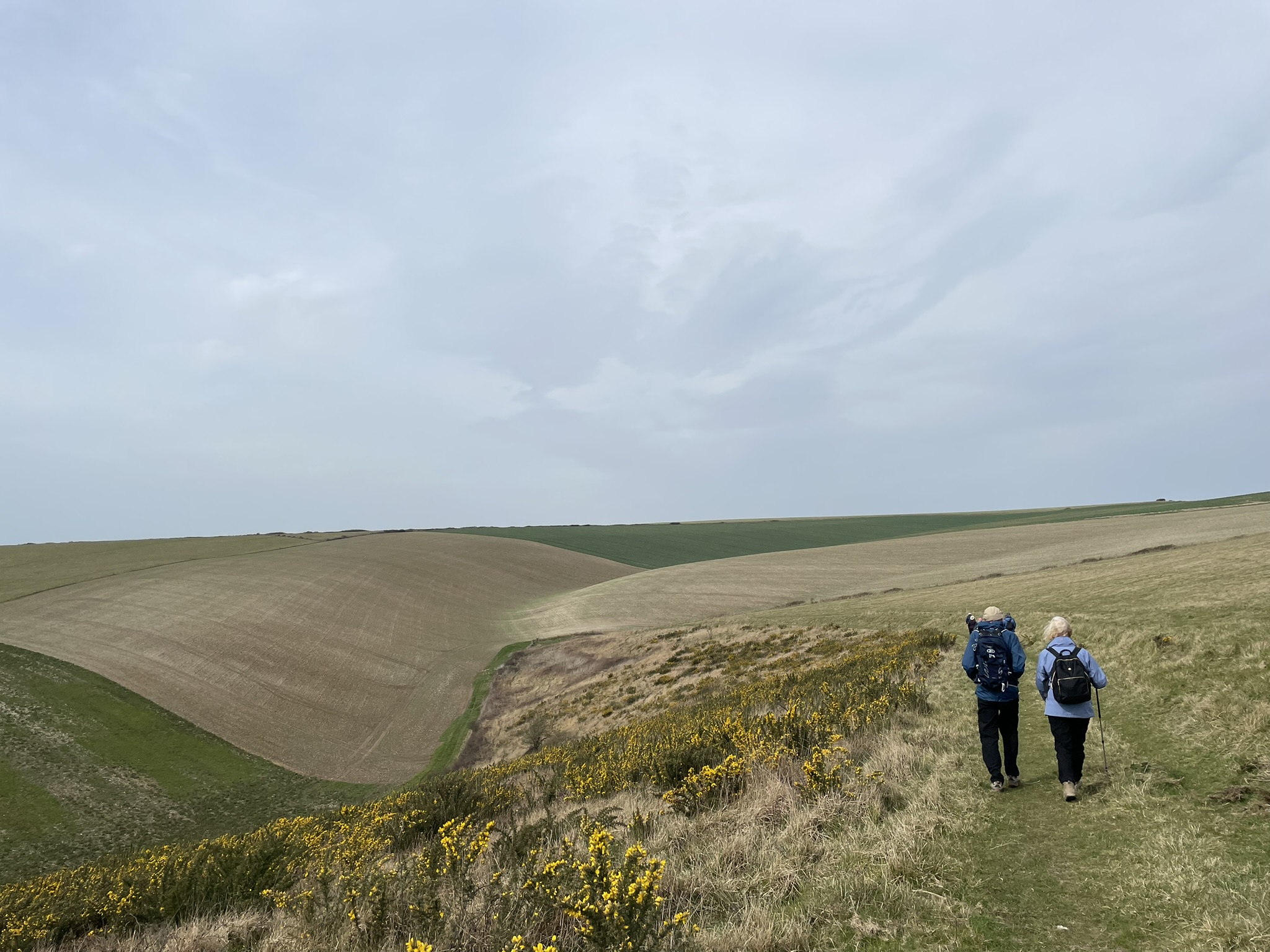
The weather on the day of the event was perfect, with David reporting that it was “not too hot, with a slightly cooling breeze and virtually clear skies, all of which combined to make a 17-mile walk across the South Downs as pleasant as it could be.”
David and Matthew were part of Group Two, accompanied by fellow walkers who “made the experience highly memorable, with great determination and good humour.” The desire to make a difference and come together amongst the community in support for such an important cause is clear, and the efforts of the walkers to complete the challenge is commendable.
By the time David’s group arrived at the finish line after eight hours, both he and Matthew had secured further donations, making their combined total over £1,400. “Despite the tough challenge, I can honestly say that this was one of the most rewarding experiences of my life. Matthew and I are proud to have supported Olly’s Future and hope to take part in future events.
Helping to lead Group One, Tony added that “the walk took in great views as well as some steep hills and we all agreed the walk was a challenge, particularly to those that had not walked seventeen miles before. Overall, a great day raising money to help save lives.”
You can read more about the vital work provided by Olly’s Future here, as well as access to important information about suicide prevention and support for those in crisis.
Thank you to everyone who joined, supported, and cheered us on – your encouragement helps us raise awareness and vital funds for suicide prevention.
Please consider donating: Click the link here. Every donation, big or small, makes a difference.
Eloise, Social Media and Events Co-ordinator
Walkers taking part in Olly’s Future Fuve Peaks Challenge.
Ruby, Youth Ambassador for the Sussex Underwater charity, dives into the “Minter Hotel project and the creation of artificial habitats for marine life.
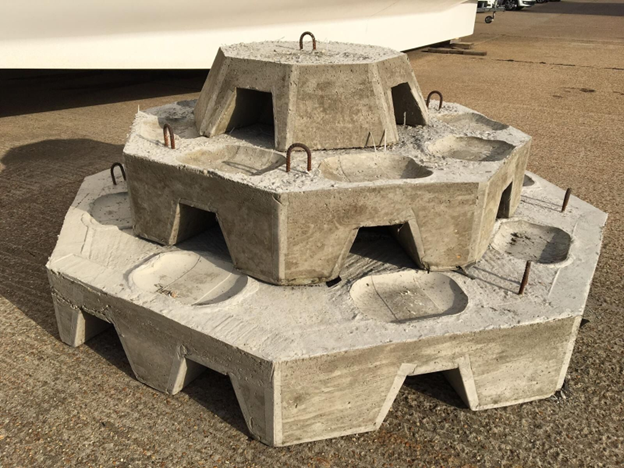
Give nature space to breathe and it will return – that’s always been our ethos at Sussex Underwater, though sometimes a helping hand along the way doesn’t go amiss. Our charity has been working with conservation-minded local fishermen to undertake an exciting new project: The Minter Hotel, brainchild of Alan Minter. These hotels are not the plush kind – rather, 3.5 tonne concrete structures placed on the seabed to create an artificial habitat for marine life. With various holes, ledges and grates, the Minter Hotels offer a home to species such as crabs, lobsters, fish and molluscs, with safe places to lay their eggs.
Since the loss of 96% of the kelp in Sussex, marine species have suffered fewer places to shelter, hunt, breed and raise young. Kelp are large brown seaweeds, and in dense populations their tree-like structures create an underwater forest. Alongside other local rewilding endeavours such as the Sussex Kelp Recovery Project, the Minter Hotels aim to re-establish healthy habitats so that our underwater ecosystem can flourish once again.
The artificial habitats, “hotels”. Credit / Sussex Underwater
After a three-year battle with logistics and laws, the first new habitat was lowered into the water in May 2025. Just 11 days later, our team divers returned to check for any visitors and were amazed by what they discovered! On the structure’s surface, seaweeds and clusters of mussels had started to take hold. Spider crabs perched nearby while wrasse and shoals of pout darted in and out of the holes. Eric Smith, co-founder of Sussex Underwater, recalls his experience diving the Minter Hotel:
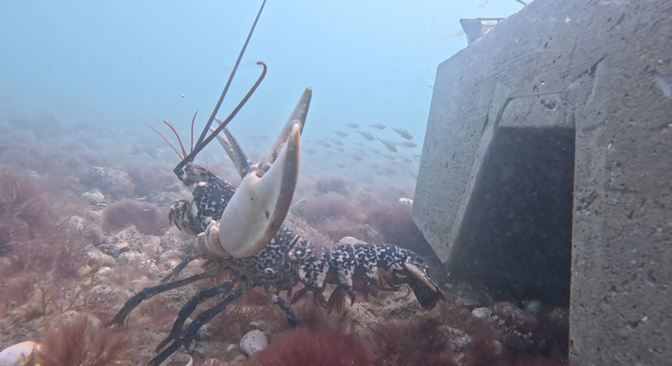
‘As I placed a fixed camera on the seabed to record the scene I felt a tap on the shoulder, Grant Pullen – another of our team who had been checking the perimeter – pointed to a large lobster walking towards the structure. She was a pregnant female (berried) carrying thousands of eggs tucked in underneath her, looking for a home to raise her brood. I must have made a movement as I turned the camera on, she shot into one of the holes that had been meticulously designed for her.
Giving her a few minutes I moved the camera to record her settling in and moving things around in her new home. A blenny who had made its home under the structure came out to watch his new neighbour. We left the lobster looking quite comfortable with her big claws blocking the entrance, protecting her babies from danger. Let’s hope she stays. It was more than we had hoped for, if nature could do that in 11 days, what can we expect in a year!’
The Minter Hotel is a fabulous example of a community coming together to preserve their local wildlife. Alan’s drive to restore the lost biodiversity of the Sussex coast has led to something really special, that’s already having a positive effect. Sussex Underwater’s mission is to share ‘glimmers of hope’ – positive stories of nature recovery to inspire the community to advocate for our local environment. Future plans for the Minter Hotel include interactive ways for the local community to monitor the underwater hotel visitors, and more habitats placed along the seabed in the following year!
A pregnant lobster at the Minter Hotel. Credit / Sussex Underwater
Henrietta, Trustee and Marketing Communications Expert, recounts the guided tour of Westerlands Farm in Graffham, Petworth, led by farm manager Oliver Hancock.
Farming is no longer what it once was. With changes in UK tax and government policy, global tariffs and increasing complexities of a fast-changing climate, farmers are having to adapt, and fast.
The new sub-industry arising in the world of agriculture is regenerative farming, which has received media attention recently as farmers and land managers up and down the country look to work in different ways with nature. Understanding the role of regenerative farming within the agricultural industry is an area of fascination for me and so it was with great enthusiasm that I joined the Friends of the South Downs for a guided walk at Westerlands earlier this week.
Oliver Hancock, farm manager at Westerlands Farm addresses Friends of the South Downs walkers.
If we look at some current farming statistics (sourced by gov.uk, Sept 2024), there are 209,000 farms in the UK with an average acreage of 82 hectares. In 2023 this made up around 70% of UK land. However, almost half of all farms are less than 20 hectares in size and this marks the key difference to many international competitors, namely those in the US. The main source of income from UK farms is dairy and beef which contribute £6B and £3.9B respectively to our country’s economy.
And yet in the 12 months to June 2025, 6,365 businesses in agriculture, forestry and fishing closed – the highest figure since data tracking began in 2017. Farmers are at a crisis point.
Oliver Hancock is bringing a new approach to farming at Westerlands, building a business around what one might term ‘agricultural tourism’. His goal is to make Westerlands a wellbeing destination to help overcome our modern-day ‘nature deficit disorder’, a view supported by scientific data. The Mental Health Foundation found that during the pandemic, 45% of people in the UK reported visiting green spaces such as parks helped them to cope with the challenges of lockdown. Their research went on to find evidence of the power of ‘connectedness’. This refers to the way we relate to, and experience nature, creating a strong emotional attachment to our natural surroundings. They found that people connected with nature are more likely to be happy in life with a greater sense of calm, joy and creativity with improved concentration levels. Full immersion in nature and staying in one of the properties at Westerlands is therefore recommended.
More information about the study is available here.
Other ways that Westerlands is looking to expand is through the use of horses, particularly relevant given the farm’s history. Until recently, a racing stud, the farm was first bought in the early 1900s by the founder of Black and White Whisky, Lord Woolavington. He converted the farm to equestrian use for breeding and producing horses for racing before changing hands to its current owners. The farm currently runs a pony trekking centre but will soon expand to take advantage of a new British Horse Society (The) funded programme called Changing Lives through Horses. This aims to help and support disengaged young people to develop life skills and engage positively with society.
Horses on the farm are given as natural a life as possible, and the farm is proud of its herb kitchen which uses natural herbs for remedial purposes. They even run a herb buffet where horses are allowed to pick and choose for themselves! Elly Middleton, manager of the equestrian centre explained that the horses are so sufficiently in-tune with their own needs that they pick out herbs that will replenish a vitamin or mineral deficiency they may be experiencing. The herbs the horses need taste sweet, the rest provide a bitter taste and so the horses leave what they don’t need, restoring their physical equilibrium. Such remedies may include lemon balm as an antihistamine, turmeric for arthritis, burdock root, nettles for iron or linseed oil for sweet itch.
From using a more varied crop of plants in new hedgerows, to the biomass boilers for providing hot water to homes and borehole water from underground aquifers, the farm is embracing every aspect of regenerative farming and sustainable living. Their small herd of Dexter cattle mean small animals with light feet which massage organic matter back into the soils, and a supply of beef to local and visiting customers. As an aside, the farm screened the film Six Inches of Soil so Oliver understands the value of mob grazing and restoring biodiversity through healthier soils.
The talk ended with Oliver saying they are still trying to find a break-even position for the farm, but he is determined to create a wellbeing destination, democratising access to nature, positively changing lives and using natural capital to improve mental health and happiness. It was an uplifting walk, full of interesting insights, and inspiring to see how many people wanted to learn more about this new source of income for an otherwise vulnerable industry. Westerlands plans to transition to a fully-fledged Social Enterprise later this year.
Learn more about the work being done and offerings at Westerlands.
Friends of the South Downs are excited to announce the launch of a new, free membership targeted to people aged 18-30.
A new membership programme, aimed at young adults, has recently been launched by the Friends of the South Downs. The aim of the programme is to broaden and expand the membership base and strengthen community engagement among Generation Z. By opening up its membership, the Society hopes to hear from a more diverse audience and respond to the growing concerns posed by the climate crisis among young people.
David Green, Chairman of Friends of the South Downs commented, ” Young adults must be given the chance to influence what we do. We want to create a vibrant and inclusive member-based organisation that delivers on the expectations for all those who share our love in the South Downs.”
“This is a fantastic opportunity for young adults who share our love of this beautiful landscape to get involved and have their voice heard. We have been working to protect the future of the South Downs for decades and now find ourselves at a pivotal moment in time, says Eloise Phillips, Social Media and Events Coordinator. “When I helped to develop the idea for free young adult membership, I wanted to encourage more young people to have their say in our campaign and the future of our charity. With rising climate anxiety and uncertainty over the future, we provide an environment where everyone can feel part of a community where environmental protection and nature biodiversity are at our core.”
Instagram
To kickstart the launch of the free young adult membership, the Friends have organised a series of free, online events catered to young adults. These will explore themes from careers in conservation, to the wildlife of the South Downs and the role of young people in environmental decision making.
The charity works with young people of all ages, from schoolchildren to university students, supporting projects that help to preserve and promote nature in the South Downs. We look forward to welcoming our new young adult members and expanding the South Downs community.
A young adult volunteer for the Friends, Dominic Owen, says, “Having recently volunteered for the charity, I am looking forward to signing up as a young adult member and making the most of the opportunities to get involved. As a recent university graduate entering the working world, the chance to volunteer with Friends of the South Downs and boost my CV with vital experience has been very useful when applying for jobs.”
After a busy few months of delivering workshops, Chris Hare, Project Manager, and Michael Blencowe, Local Wildlife Expert, reflect on their experiences working with schools across Hampshire.
Visiting Hampshire Schools: Chris Hare, Project Manager
What a busy start to the year we have had with our new South Downs for All Project with Hampshire Schools. Between January and April I delivered eight heritage workshops to our participating schools, while Michael Blencowe delivered workshops on the wildlife of the South Downs.
Six of the eight schools are in the Portsmouth/ Gosport area and many pupils who come from homes with low incomes and other challenging circumstances. The Friends of the South Downs believe it is vitally important that all children, whatever their backgrounds have a chance to experience the beauty of this outstanding landscape and to learn about its abundant heritage, including both history and natural history.
The good news is that both mine and Michael’s workshops have been very well received, with the children showing great enthusiasm and a real desire to learn. At every session we have run, eager hands have gone up in answer to questions from myself and Michael, or to ask us questions. There can be no doubt that we are doing very necessary work in promoting a love and understanding of the countryside and the South Downs in particular.
Michael Blencowe, Sussex wildlife expert leading a presentation. https://michaelblencowe.com/. Credit: Mr Lofty
However, there was an aspect of these workshops that did rather surprise, even shocked me, and demonstrated the real need for this project. I would start my school sessions by asking the children if they knew what the South Downs were, where they were, and whether they had visited them. Only at one school – Buriton – which is in the heart of the South Downs – were the children able to identify the South Downs, or to even know they were hills. This should be a big wake-up call for all of us: we cannot rest on our laurels and assume that the rising generation will have the same joy and empathy for the downs that we have.
Yet, this should not be taken as a counsel of despair: we are addressing the problem and addressing it very successfully. I would like to share with you some of the feedback we have had from the teacher in the schools and from the pupils.
Chris Hare, Project Manager. Credit: Samuel Hare
From the Teachers
“Chris had a lovely manner with the children and kept them all engaged throughout the talk. Thank you- it was a great session.”
“Michael was so enthusiastic and shared many of his own experiences with the children. his passion for the wildlife on the South Downs shone through.”
“Chris Hare adapted vocabulary to age of children. He engaged them and took time to listen to their ideas and answer their questions.”
“Michael was absolutely fabulous – he was so engaging and captured the children’s attention with his humour and wit and this made for a very interesting and informative talk.”
From the Children
“It was a fun talk and interesting to learn about the chalk and the flint! Chris was very nice and was really passionate about this topic”.
‘” thought it was fun to learn about different types of animals I didn’t know about, where they live and what they eat and even how fast they can fly or move.”
“I really want to go the South Downs national park now!”
“The man was nice and the facts were nice. I didn’t know about the South Downs before and I liked that he knew about dinosaurs.”
“He was so funny and it was really good fun to listen to him talk about the ants nest which are lumps in the ground. I have actually seen this as I fell over one and they all crawled up my leg!”.
Chris Hare, Project Manager. Credit: Samuel Hare
Michael’s Feedback:
It’s been a real pleasure visiting schools across Hampshire as part of the ‘South Downs for All’ project. I’ve been giving the children an illustrated lesson all about the amazing wildlife that can be found in the South Downs National Park. The children have learned all about Adders, Glow-worms, orchids, Hares, moths and Adonis Blue butterflies and they have been amazed with my tales of the record-breaking Peregrine Falcon and the unbelievable life of the Swift.
For these sessions I have been reunited with Dusty, the stuffed Otter, who is on her last tour of duty before retiring to the Booth Museum. This has given the children a hands-on experience with one of the South Downs rarest resident species. The children have been great and their questions are so much more interesting than the ones I get from adults! “Do Hedgehogs eat Pizza?” “Am I allowed to pick up a Smooth Snake if I’m taking it to the hospital?” and “Is King Charles allowed to keep an Otter as a pet?”
For the Future
Having run the initial workshops, we are now working with our partner schools to arrange visits to our three partner museums: Butser Ancient Village, Weald and Downland Museum, and Gilbert White’s House. It is our good fortune not just to live so close to a wonderful landscape, but also to have three outstanding centres of downland interpretation on our doorstep. This project ensures that children from less affluent areas do not miss out on the opportunity to visit these places.
The South Downs National Park offers grants that help with cost of school transport and school visits. We are encouraging all our partner schools to apply for this funding, as this will allow us to extend what we can offer further to the grant we have already received from the National Lottery Heritage Fund.
To find out more information about the project and to look at the work we have already done with Sussex schools in previous years, please look at our website, www.southdownsforall.org.uk









 Instagram