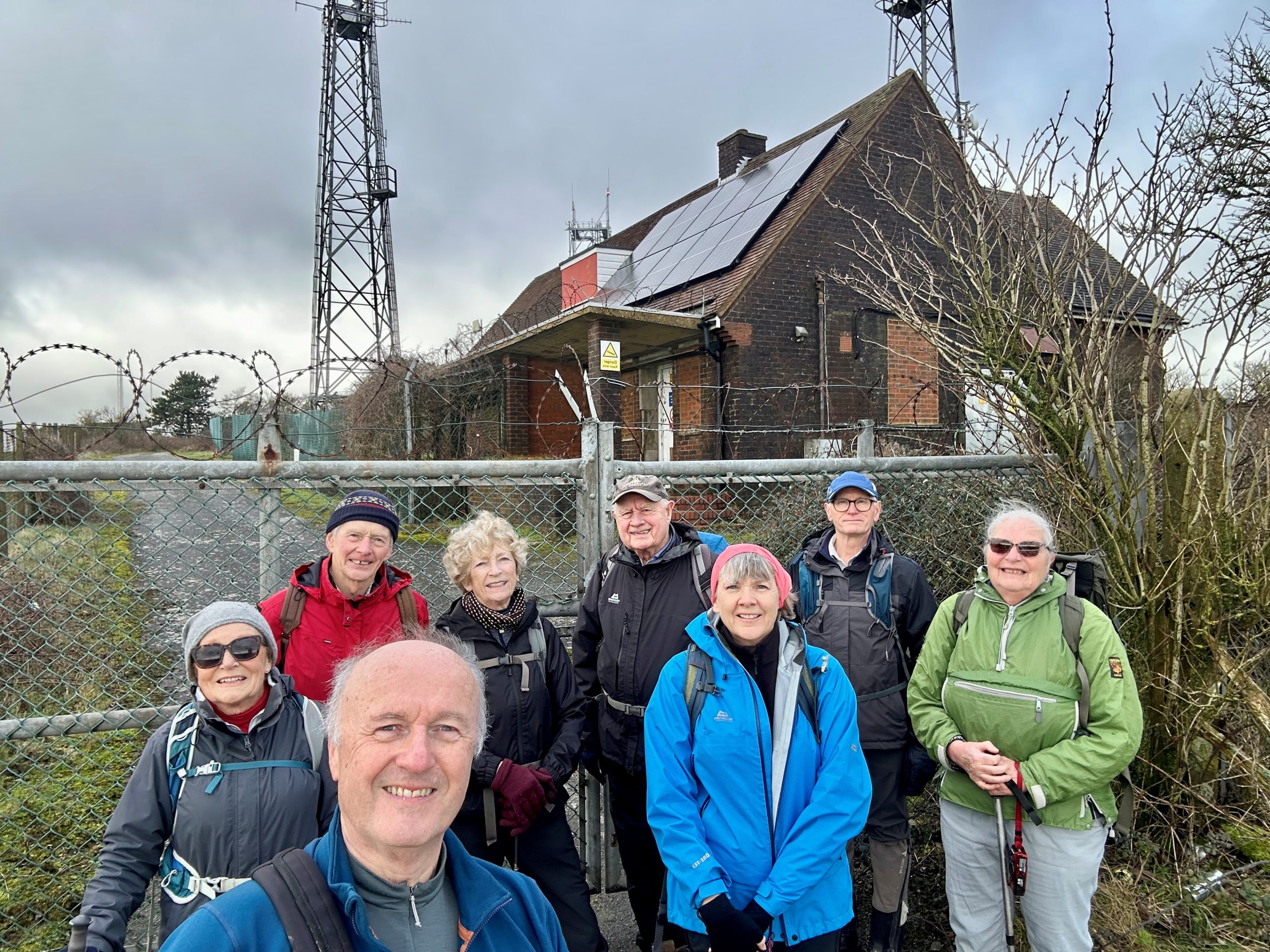


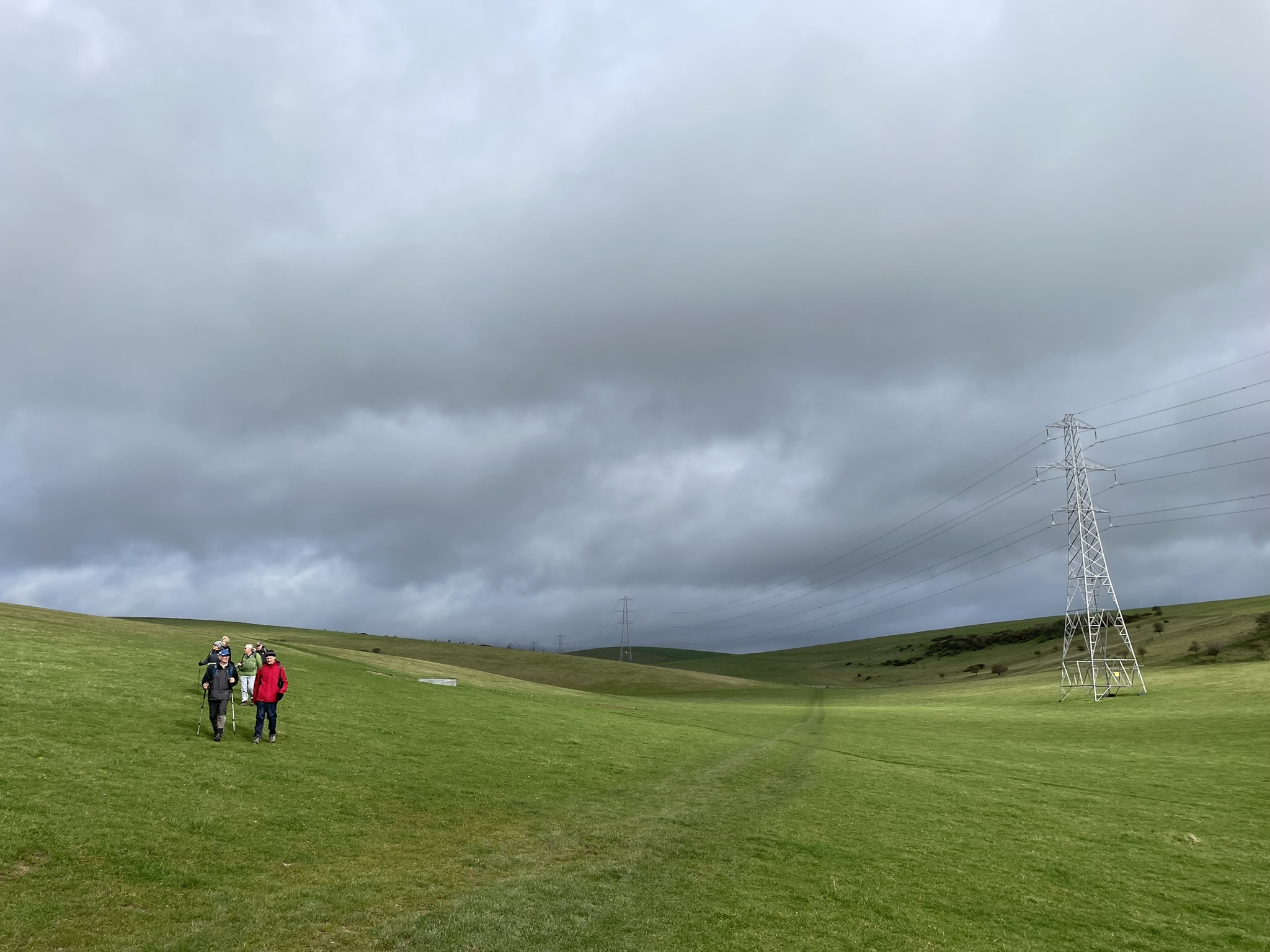
Trustee David Taylor recently led a guided walk around Truleigh Hill near Shoreham. During a coffee break, David spoke about RAF Truleigh Hill’s role as a radar site during WW2 and the early years of the Cold War.
Sitting at over 700 feet above sea level, Truleigh Hill became operational in July 1940, right at the height of the Battle of Britain. One of six Sussex radar sites at the time, Truleigh Hill’s contribution to victory in the battle cannot be overstated. The Germans poised just across the Channel were ready to invade, all they needed to succeed was control of the skies. Britain had introduced the world’s first integrated air defence system, just in time to give the RAF the advantage they needed. With early warning of an approaching air raid, RAF fighters could gain much needed altitude before entering any fight; the rest is history.
Later in the war, Truleigh Hill was selected as a location for ‘Gee’, a navigation system which gave allied bombers a much more accurate position, vital for effective targeting. This navigational aid role continued after the war and into the early 1950’s.
In 1949, the Russians detonated their first atomic bomb, and the threat of war returned. Truleigh Hill was upgraded to become part of the ROTOR network, an advanced radar system designed to detect incoming, high altitude bombers. The ‘bungalow’ in the image is actually the heavily fortified guardroom, built post-war and giving access to a tunnel. The tunnel led to an operations bunker, located 50ft underground and able to withstand a near-miss from a 20 kiloton atomic weapon.
By 1957 with the advent of the hydrogen bomb, and advances in radar technology, fewer and better protected sites were required and Truleigh Hill ceased operations. The site was sold into private ownership in 1965 and now serves the emergency services and private telecommunications.
David Taylor
Trustee & Walks Leader
February 2026