


How we are supporting Sussex Wildlife Trust with essential conservation at Ebernoe Wildlands Nature Reserve.
Ebernoe Wildlands Nature Reserve features one of the richest woodlands for wildlife in the South East. It is a matrix of dense woodland, sunny rides, open glades, and scrubby edges. Barbastelle and Bechstein’s bats, the rarest bats in Europe, make their homes in the dense woodland whilst amongst woodland glades you may spot Purple Emperor, White Admiral and Silver-washed Fritillary butterflies. If lucky, you may see, or hear, birds like Firecrest and Marsh Tit enjoying the kaleidoscope of scrubby habitats.
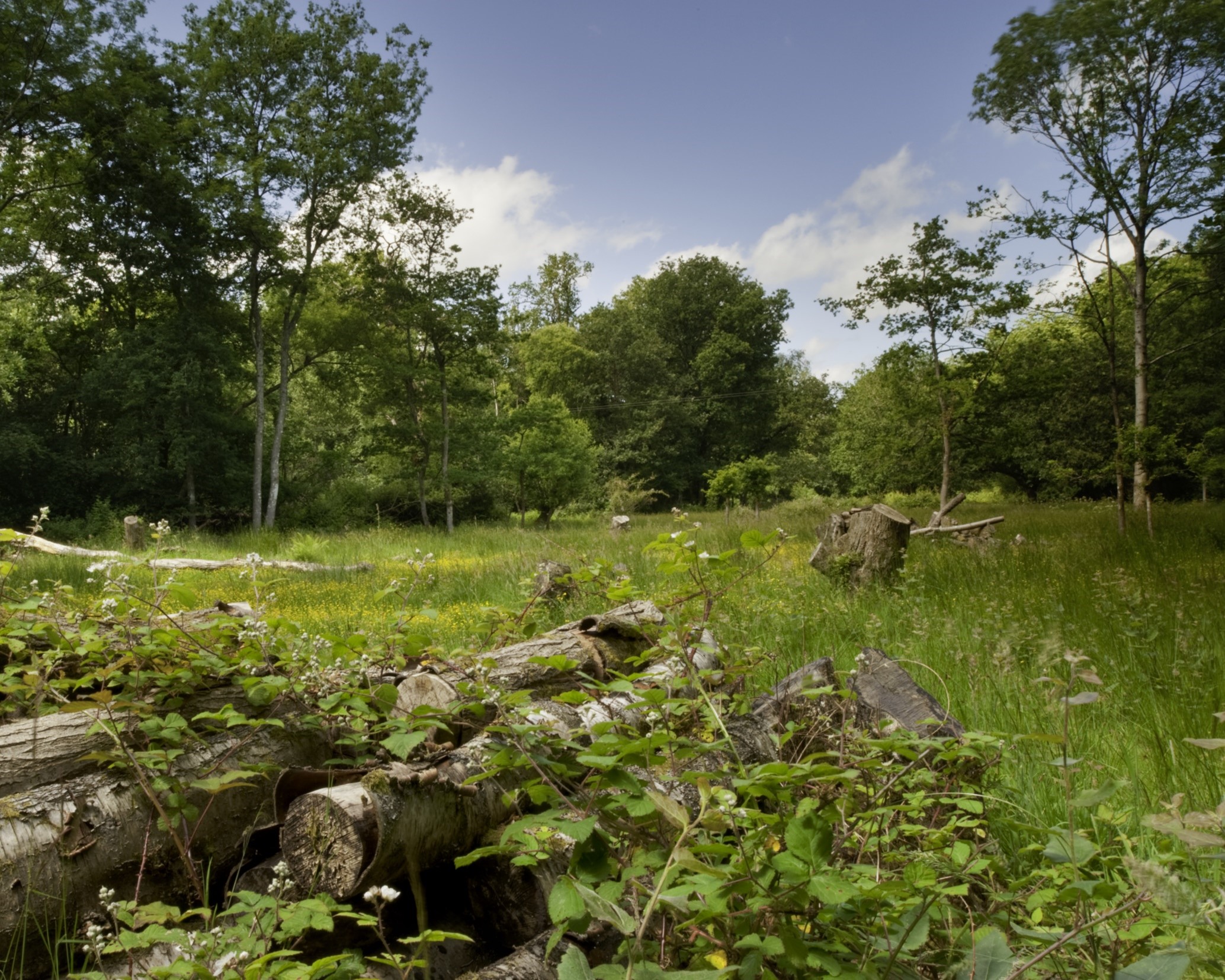
This is one of Sussex Wildlife Trust’s (SWT) most important nature reserves. As such, it is often the subject of targeted nature reserve expansion as they seek to regenerate nature on a larger scale. Alongside Ebernoe Common lies Butcherlands, a rewilding area with management integrated with that of Ebernoe.
Key to the management of these reserves is grazing. Ebernoe Common is an ancient wood-pasture, managed for centuries through a combination of traditional woodland management and grazing. What we may call rewilding at Butcherlands is really just a modern take on wood-pasture, so also driven by grazing. Grazing is thus the main factor to create a habitat mixture of incredible diversity, and thus more living space for a greater variety of species.
Getting the grazing right is vital to maintain this matrix. Too much and the dense woodland reduces, and the bats suffer. Too little and the open glades and rides will disappear as trees shade out the species that thrive in sunlight. So SWT put their cows (“Sussex Reds”) onto the site for carefully planned periods. Just enough to get the balance right!
This works well, and SWT have amassed considerable experience in managing their cattle. One essential activity, however, is “lookering” – the checking of cattle every day. In an open field this is easy, but in this patchy woodland it can take hours. This can compromise SWT’s resources to deliver the necessary grazing regime. SWT endeavour to attach GPS collars to the cattle, emitting signals that can be picked up by a smartphone, allowing their position to be identified, and the wellbeing of all the cattle can be checked easily.
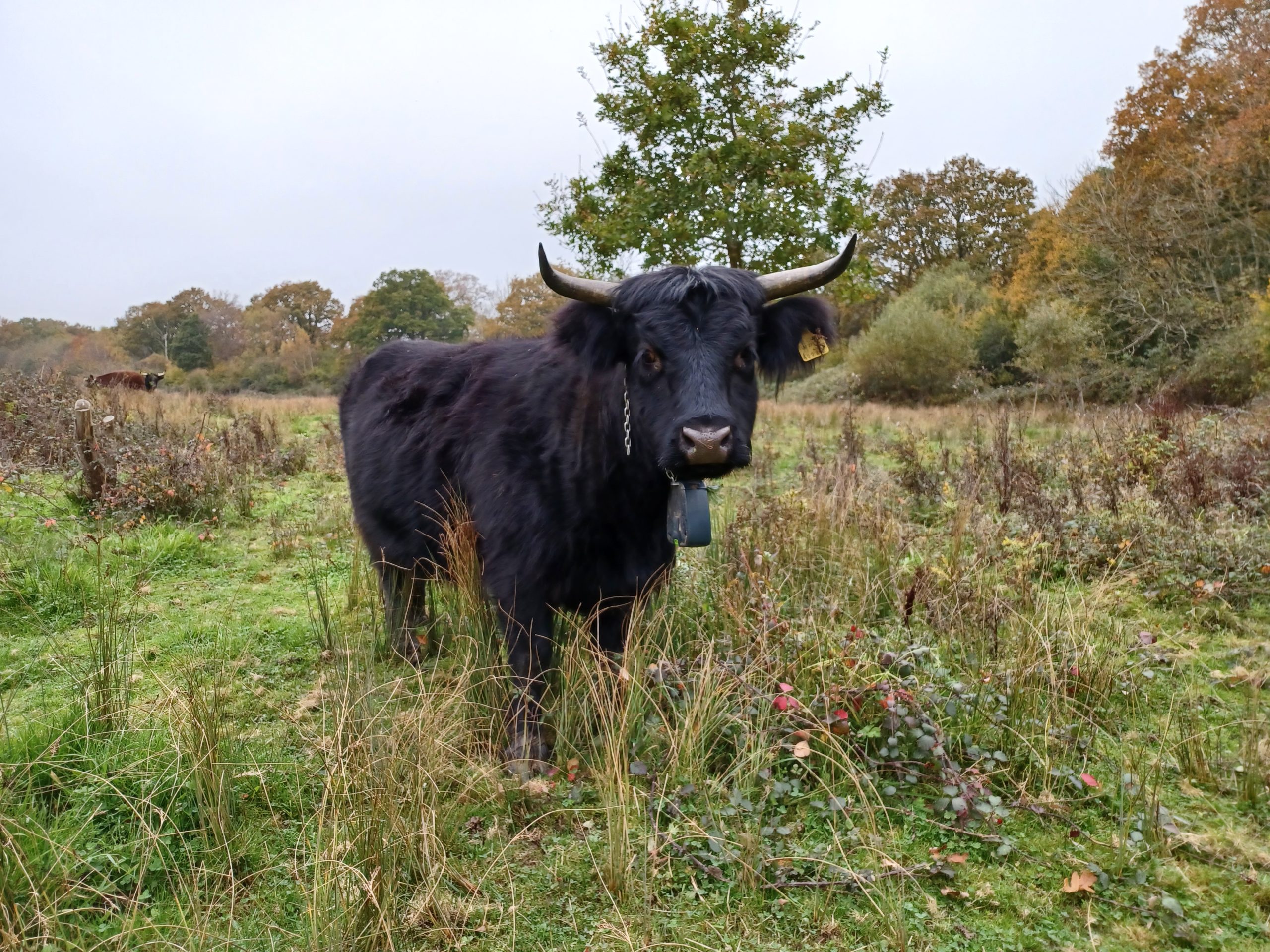
It may seem odd that the viability of a grazing project (and so the richness of wildlife on a nature reserve) comes down to a piece of electronic kit hanging round a cow’s neck. Yet this is the case. Friends of the South Downs have seen this as a key point at which our financial support can help. Funding for GPS collars enables SWT to manage their cattle more efficiently (and effectively) and so deliver a great diversity of wildlife at one of the most important nature sites in the South Downs.
And there is something romantic about seeing native Sussex Reds calmly grazing in the dappled shade of an open sunny woodland. It’s good for Friends to be a part of this project.
Dr Tony Whitbread
Trustee